
Introduction
In today’s fast-paced product environment, clarity and alignment are vital. A well-crafted roadmap is more than a list of milestones — it’s a visual story that connects the product vision, organizational strategy, and delivery outcomes.
Yet, not all roadmaps serve the same purpose. The two most common — the Strategic Roadmap and the Product Roadmap play distinct but complementary roles in ensuring alignment from the boardroom to the scrum team.
1. The Strategic Roadmap: Framing the Vision
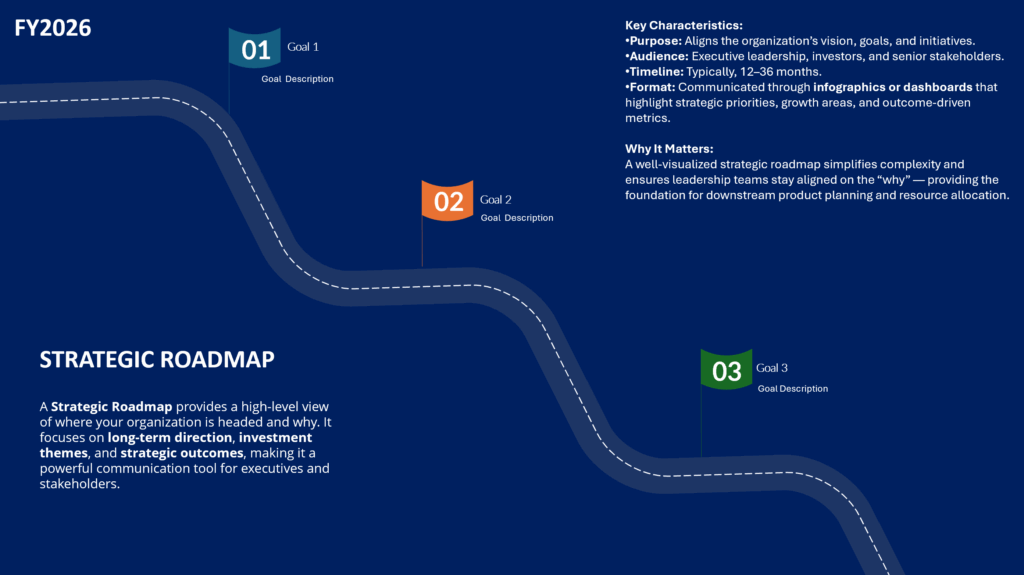
A Strategic Roadmap provides a high-level view of where your organization is headed and why. It focuses on long-term direction, investment themes, and strategic outcomes, making it a powerful communication tool for executives and stakeholders.
Key Characteristics:
- Purpose: Aligns the organization’s vision, goals, and initiatives.
- Audience: Executive leadership, investors, and senior stakeholders.
- Timeline: Typically 12–36 months.
- Format: Communicated through infographics or dashboards that highlight strategic priorities, growth areas, and outcome-driven metrics.
Why It Matters:
A well-visualized strategic roadmap simplifies complexity and ensures leadership teams stay aligned on the “why” — providing the foundation for downstream product planning and resource allocation.
2. The Product Roadmap: Translating Vision into Execution
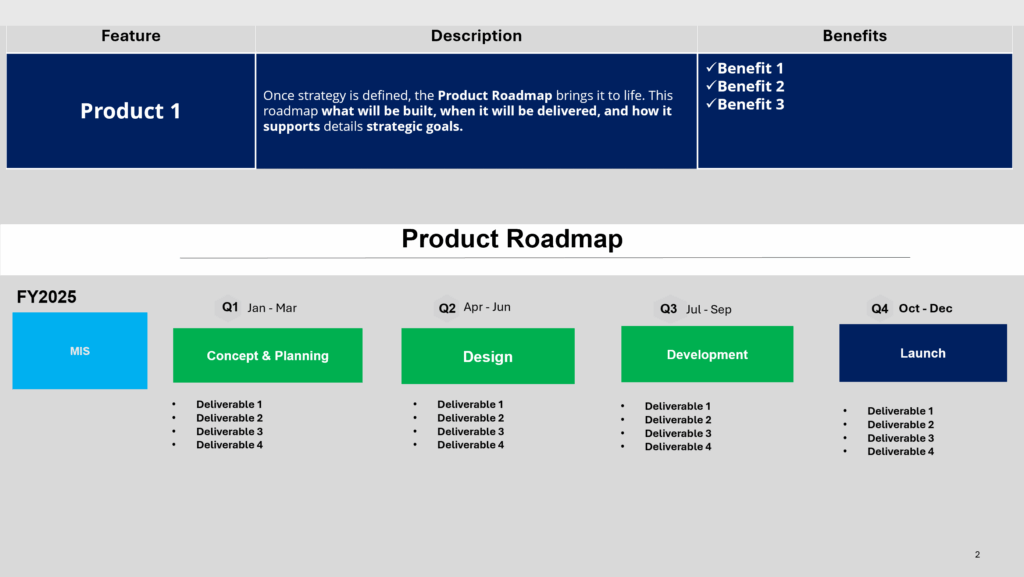
Once strategy is defined, the Product Roadmap brings it to life. This roadmap details what will be built, when it will be delivered, and how it supports strategic goals.
Key Characteristics:
- Purpose: Guides execution and communicates delivery progress.
- Audience: Product teams, engineering, marketing, and operations.
- Timeline: Typically 3–12 months.
- Format: Presented in PowerPoint decks or interactive planning tools, featuring timelines, deliverables, dependencies, and KPIs.
Why It Matters:
A tactical roadmap ensures every sprint, release, and milestone ties directly back to the larger organizational strategy — keeping execution focused, measurable, and transparent.
3. Communicating with Visuals: From Complexity to Clarity

Great roadmaps don’t just inform — they inspire action. Visuals play a critical role in making complex information understandable across audiences.
Strategic Roadmaps benefit from:
- Infographic-style layouts showing pillars, themes, and investment areas.
- High-level visuals that emphasize outcomes over features.
Product Roadmaps thrive with:
- PowerPoint templates that include timelines, release phases, and dependencies.
- Clear milestone visuals that connect tactical progress to strategic objectives.
By tailoring your visual approach, you make it easier for stakeholders to interpret the story behind the roadmap — reducing confusion and increasing confidence in the plan.
4. Request Visual Roadmap Templates

To make it easier for teams to get started, we’ve created ready-to-use visual roadmap templates that include both:
- Strategic Roadmap Infographics, and
- Product Roadmap PowerPoint layouts with timeline and deliverable structures.
📩 Click here to request access to the Visual Roadmap Templates via Google Form.
These templates are designed to help product managers and leaders present their roadmap with clarity, consistency, and alignment — no matter where they are in the planning cycle.
5. Final Thoughts
A roadmap is more than a planning artifact it’s a strategic communication tool that connects vision to value.
By distinguishing between strategic and product roadmaps and presenting them through clear, visually engaging formats, product managers can:
- Strengthen alignment across teams,
- Improve stakeholder engagement, and
- Drive execution with greater confidence and transparency.
As organizations evolve, so should the way we communicate our vision.
A visual roadmap doesn’t just show the path — it makes the journey understandable, actionable, and inspiring.